
Majlis Interior Ideas: Merging the Old and the New in Dubai
In any Dubai home, the majlis is much more than a mere sitting room; it stands as the throbbing centre of generosity, a space in which visitors are welcomed, business is conducted, and loved ones assemble over dates and freshly brewed coffee Grounded in Emirati and Gulf heritage, the majlis carries age-old etiquette and generosity into the modern villa and high-rise apartment alike Dubai homeowners are increasingly keen to celebrate this heritage without sacrificing the understated luxury and clean lines of contemporary design The finest interiors of 2026 sit right at that crossroads, pairing carved wooden screens with sculptural sofas and warm desert tones with discreet smart lighting No matter whether your home has a waterfront view in Dubai Marina or sits among the villas of Arabian Ranches, a well-planned majlis can become its most memorable room As you go you will find genuine 2026 market pricing to turn ideas into an actionable plan
The Heart of the Majlis: Why It Remains Relevant
Before you pick a single fabric, it helps to understand what the majlis really means in Emirati culture By tradition it is a semi-formal reception room, usually placed near the entrance so guests can be received without walking through the private areas of the home Seats line around the perimeter of the room, encouraging conversation and letting everyone face one another as equals Across many Dubai households a distinct men’s and women’s majlis is still the preference, especially in larger villas across Jumeirah and Al Barsha Because the room signals a family’s style and hospitality, it tends to attract the richest materials and the boldest design choices With this purpose in mind, each following choice, from layout to lighting, becomes far easier
Idea One: Low, Inviting Seating
Floor-level seating dressed in generous cushions defines the traditional majlis, and it remains a beautiful starting point For a modern take, many Dubai designers lift the seat height slightly and swap thin floor mattresses for tailored, deep-cushioned banquettes in hard-wearing performance fabrics Wraparound perimeter seating preserves the traditional face-to-face arrangement while feeling tailored rather than casual A layer of bolsters, lumbar cushions and embroidered pillows, layered together, add comfort and a genuine sense of welcome A neutral upholstery base allows modern interior designer dubai you to refresh the whole look each season by just swapping the cushion covers A low coffee table or a group of brass-topped side tables puts coffee and dates within easy reach of every seat Ultimately, the aim is seating so comfortable that guests happily linger long after the coffee has been poured
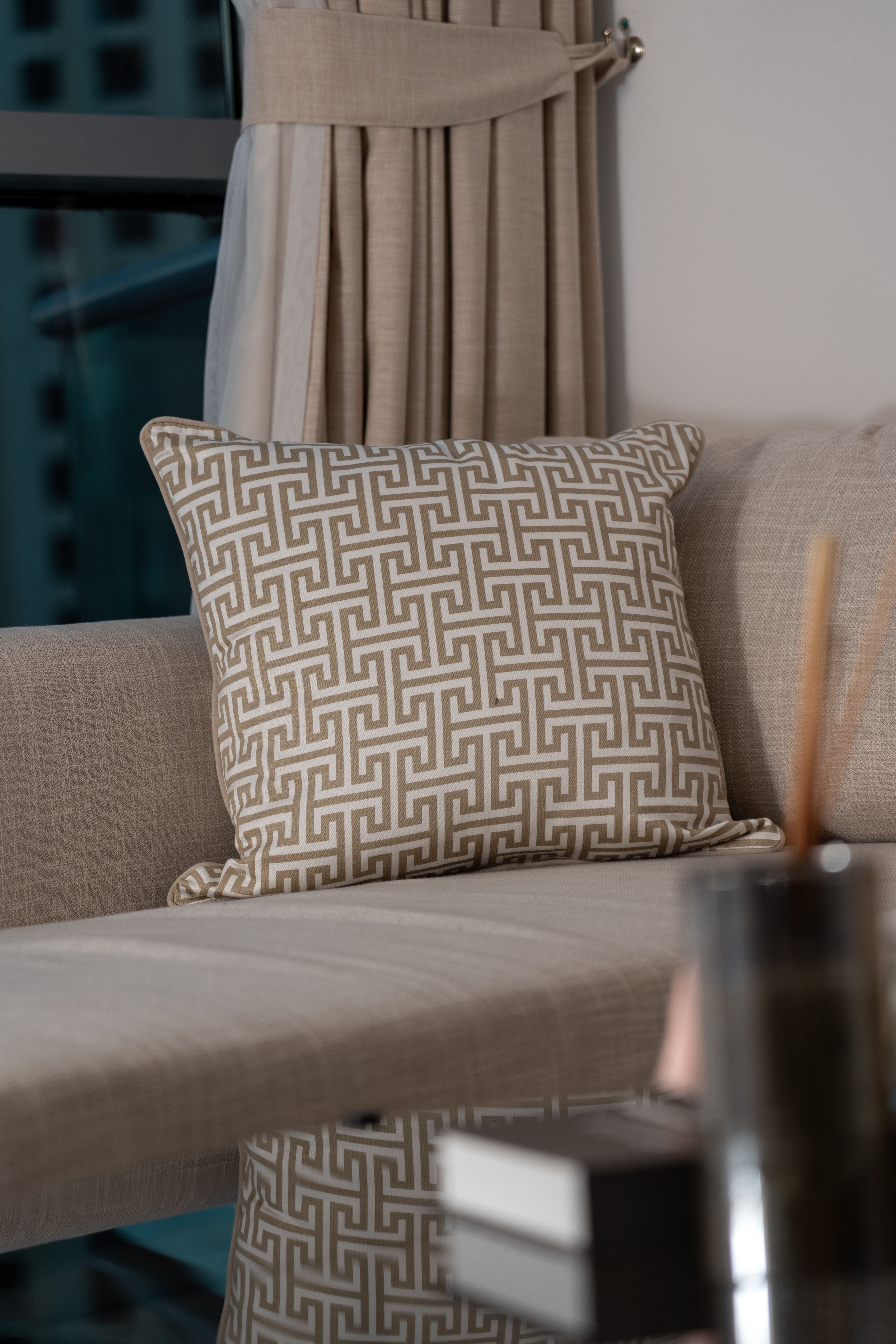
- Choose stain-proof performance fabrics that hold up to regular entertaining
- Leave a clearance of 70 to 90 centimetres for a walking path behind the seating
- Balance firm base cushions with softer scatter pillows to give support and comfort
- Bring in floor cushions so extra guests can be seated with ease
Idea Two: Desert-and-Light Colour
Colour is where heritage and modernity come together most naturally in a Dubai majlis A backdrop of warm sand, ivory, and soft taupe nods to the surrounding desert and keeps the room feeling calm and expansive Atop that base, designers bring in richer accents like burnt terracotta, olive, deep teal, or the age-old duo of maroon and gold Metallic finishes play a key supporting part, with brushed brass and antique gold adding the glow long tied to Gulf interiors In 2026 the mood leans firmly toward quiet luxury, so those metallics are used sparingly rather than covering every surface Natural light counts as a design material in itself, and layered sheer curtains help diffuse Dubai’s harsh midday sun In the end, the scheme should read as grounded in the land yet clearly refined
Third Idea: Mashrabiya, Arches, and Contemporary Screens
Nothing says heritage quite like the mashrabiya, the intricately carved wooden screen that has cooled and shaded Gulf homes for generations For a modern majlis it can be reimagined as a laser-cut metal or timber partition, a statement feature wall, or a sliding panel that filters light between rooms Subtle arches, whether outlining a doorway or repeated as wall niches, introduce a gentle architectural rhythm that is at once classical and current Geometric Islamic patterns can be enlarged and pared back so they come across as contemporary art rather than pastiche These features also tackle practical issues, providing privacy and shade without obstructing airflow or valuable daylight Deployed sparingly, these details give the room instant cultural depth
Fourth Idea: Ceilings and Lighting as Statement Art
In plenty of Dubai majlis schemes, the ceiling is handled as a fifth wall and a true focal point Recessed ceiling coves, layered gypsum details, and subtle wooden beams bring architectural interest overhead without crowding the floor below Although a large central chandelier remains a beloved statement, 2026 tastes favour sculptural, cleaner-lined fixtures over heavily crystalled designs Alongside that centrepiece, a layered mix of warm recessed downlights, wall washers, and hidden LED strips works to flatter the room and everyone in it Smart, dimmable circuits enable one room to move from a bright daytime gathering to an cosy evening majlis More often than not, it is lighting that turns a merely pretty majlis into a truly atmospheric one
Idea Five: Custom Carpentry and Heritage Craft
Bespoke joinery is what makes a majlis genuinely one of a kind Built-in wall seating, concealed storage, and display recesses for heirlooms or an oud burner all depend on skilled carpentry Because Dubai has so many joinery workshops, bespoke cabinetry, panelling, and screens are very achievable even on mid-range projects Natural materials carry the heritage theme, so expect walnut, oak, rattan accents, and hand-woven rugs set over polished stone or porcelain floors Artisanal details like a mother-of-pearl inlay tray or a hand-poured brass incense burner root the room in regional craft traditions By mixing these tactile, warm materials with a few sleek modern pieces, the space never feels like a museum The real magic is in the balance between the artisanal and the polished
Old Versus New at a Glance
It can help to see how traditional and modern majlis choices line up side by side The table below matches common traditional elements with their modern Dubai takes, along with the feeling each tends to create Treat it as a menu, not a rulebook, blending rows as you like to fit your home and budget Many of the most successful 2026 interiors pull from both columns within a single room Take a mostly modern shell can be warmed beautifully with one or two bold traditional touches In reverse, a traditional majlis can look fresh thanks to restrained modern lighting and simplified pattern
| Element | Traditional Take | Modern Dubai Twist |
|---|---|---|
| Seating | Floor cushions around the perimeter | Low, structured banquettes in neutral performance fabric |
| Colour and finishes | Maroon and gold with heavy ornament | Sand-and-ivory base with restrained metallic accents |
| Pattern and partitions | Hand-carved timber mashrabiya | Laser-cut screens and simplified geometric motifs |
| Lighting | Elaborate crystal chandelier | Sculptural fixture plus layered, dimmable LED |
| Floors | Layered traditional rugs | Large-format stone or porcelain topped with a statement rug |
Budgeting and Planning Your Majlis in 2026
More often than not, refreshing the majlis costs less than homeowners assume As a 2026 benchmark, mid-range home interiors in Dubai are roughly AED 200 to 400 per square foot, whereas luxury villa work can climb to AED 600 to 1,200 and beyond A single majlis of roughly 250 to 400 square feet thus fits comfortably within many renovation budgets, especially if you preserve the existing shell The elements most likely to push costs upward are custom joinery, imported stone and statement lighting Design fees alone are usually around AED 175 to 550 per square foot, or about 10 to 20% of the total budget Treat these as broad market ranges rather than firm quotes, so always confirm the details for your own project
A Realistic Timeline, From Idea to Welcome
The schedule varies with how much you change, a clear sequence helps set expectations Focused on furniture, textiles, and lighting, a cosmetic majlis update is often done in a few weeks A deeper renovation involving joinery, ceilings, and finishes generally follows the broader residential pattern of roughly six to ten weeks on site Concept design is generally two to four weeks, and detailed design and material selection add several more before work begins When approvals are required by your building, factor in time for a fit-out permit and any no-objection certificate A short buffer for snagging keeps the finished majlis guest-ready with no last-minute stress Plan the sequence early, and the whole project unfolds with far less friction